

Pench Global Venture
Your Safari Gateway
Nestled in the heart of Madhya Pradesh, Pench Global Venture draws its inspiration from the pristine and legendary landscape of the Pench region an area renowned for its natural beauty, rich biodiversity, and enduring ecological balance. This region spans the Seoni nand Chhindwara districts and extends southward to the Maharashtra border, forming part of the majestic southern Satpurahills. The Pench landscape covers an expansive forested area of approximately 758 square kilometers, comprising protected core zones and vast buffer regions that support seamless wildlife movement and ecological harmony. This land is celebrated for its lush forests, open grasslands, and thriving natural ecosystems, representing sustainability and long-term growth. The region is enriched with diverse flo- -ra, including Teak, Bamboo, Haldu, Mahua, Saja, and Amla. The forest floor is alive with grasses, shrubs, and young saplings, creating a vibrant and selfsustaining environment. Flowing through the heart of this wilderness is the Pench River, originating from the Seoni & Chhindwara district,serving as a lifeline that nourishes the land and sustains its ecological vitality. Pench Global Venture is founded on the values reflected by this remarkable region—strength, balance, and longevity. Inspired by nature’s resilience and harmony, we are committed to responsible development,creating opportunities that respect the environment while building a trusted and forward looking legacy.
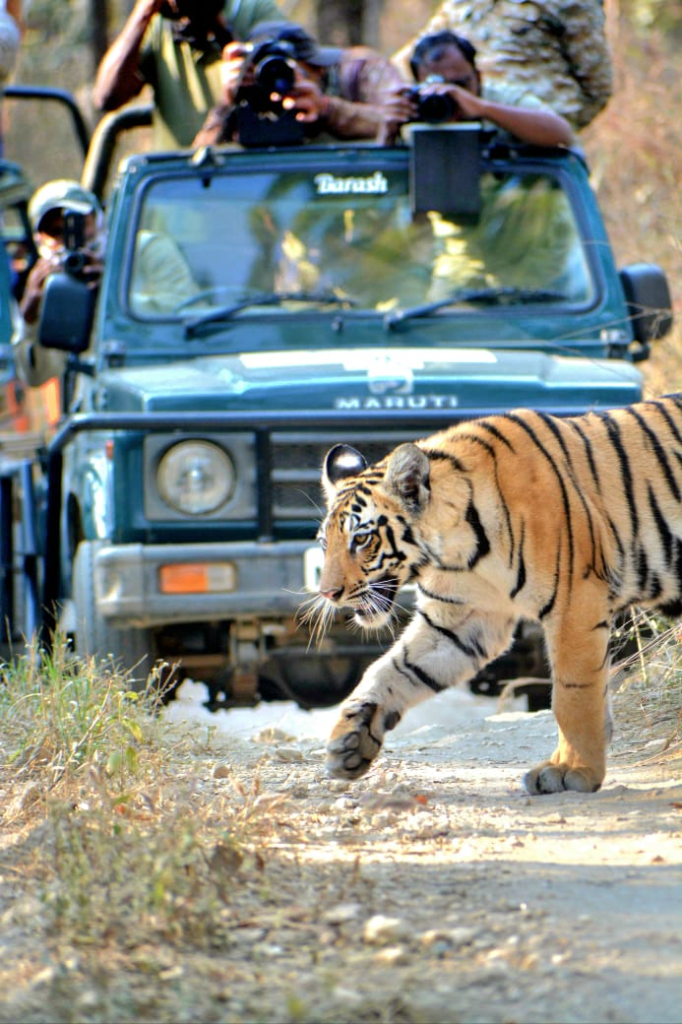


Top Activities and Attractions in Pench
The Story of Pench National Park
Officially renamed Indira Priyadarshini Pench National Park in November 2002, Pench is a treasure trove of natural and cultural heritage. Its lush forests and rich wildlife have been documented as far back as the 16th century in the Ain-i-Akbari, authored by Abul Fazl , the Grand Vizier in Emperor Akbar’s court, highlighting the region’s long-standing significance. During the British colonial period, Pench’s forests faced intense exploitation for timber and hunting , causing considerable ecological damage . While certain areas were designated as
Reserved Forests as early as 1862, inadequate protection allowed environmental degradation to continue for decades.
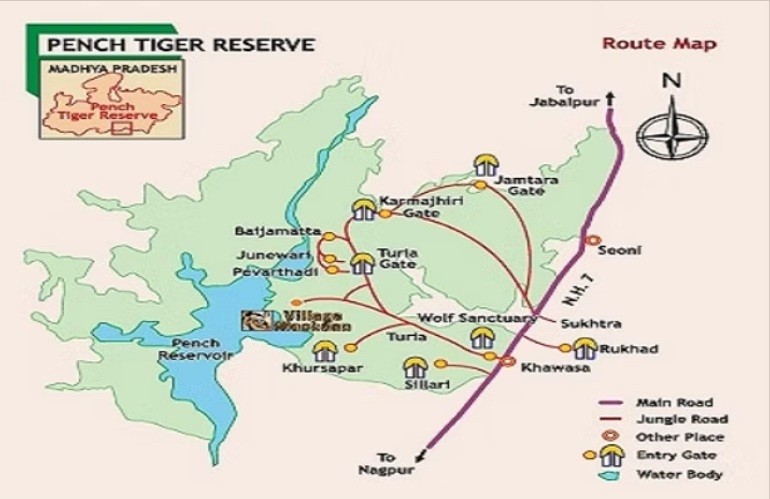
After India gained independence, dedicated efforts were made to preserve and restore this precious landscape. In 1977, Pench was declared a Wildlife Sanctuary, and by 1983, it achieved the status of a National Park. Its significance grew further in 1992 when it became part of Project Tiger, earning the distinction of India’s 19th Tiger Reserve and the first interstate Tiger Reserve, spanning Madhya Pradesh and Maharashtra. Pench’s enchanting wilder-ness also inspired global literature. Rudyard Kipling drew upon this very landscape for his timeless classics, The Jungle Book and The Second Jungle Book. The adventures of Mowgli, the feral child, along with Bagheera the panther and Baloo the bear, are all set against the lush Seoni jungle, now a vital part of Pench National Park. Today, the Pench Tiger Reserve stretches across approximately 758 square kilometers, encompassing the core zone of Pench National Park (292.85 sq km), the Mowgli Pench Wildlife Sanctuary (118.30 sq km), and surrounding buffer zones that ensure thriving wildlife habitats. Home to majestic tigers and countless other species, Pench stands as a beacon of India’s commitment to conservation, biodiversity, and the enduring magic of the wild.
| Geographical Insights into Pench National Park | Pench Connectivity: Road Travel Distances |
| Total Forest Area – 1020 Square Kilometres | Distance from Delhi – 1159 Kms |
| Core Area in Madhya Pradesh – 299 Square Kilometres | Distance from Mumbai – 884 Kms |
| Buffer Area in Madhya Pradesh – 464 Square Kilometres | Distance from Hyderabad – 595 Kms |
| Area in Maharashtra – 257 Square Kilometres | Distance from Pune – 783 Kms |
| Districts – Seoni & Chhindwara of Madhya Pradesh & Nagpur of Maharashtra | Distance from Kolkata – 1160 Kms |
| Forest Type – Dry Deciduous | Distance from Nagpur – 95 Kms |
| Temperature – Minimum 4 Degrees in December to Maximum 42 Degrees in May | Distance from Jabalpur – 205 Kms |
| Annual Rainfall – Approx. 1397 mm | Distance from Chhindwara – 124 Kms |
| Rivers – Pench River, a tributary of the Kanhan River | Distance from Mandla – 175 Kms |
| Hills – Southern Satpura Range | Distance from Chandrapur – 250 Kms |
| Altitude – From 580 to 675 metres above sea level | Distance from Umaria – 372 Kms |